Drip irrigation is a quiet hero. It sips water, feeds the roots, and rarely asks for attention. Then one day a plant looks sad, and you find a soggy spot with a broken line hiding in it. We just repaired a drip system in Aubrey where a single split tube had been watering the driveway for weeks.
At Stonebridge Lawn and Garden, we handle everything from drip irrigation system setup to maintenance and repairs across North Texas. We see the same few problems again and again. Here is what causes them and how we fix them.
What Are the Most Common Drip Irrigation Problems?
Most trouble comes from five things: clogs, leaks, low pressure, bad spacing, and poor planning. The good news is that each one has a fix.
Problem 1: Clogged Emitters
An emitter is the tiny part that lets water drip out. Dirt, sand, and minerals can plug it. When that happens, the plant at that spot gets less water than it needs. We often find clogs after a hard rain stirs up the soil.
The fix: Flush the lines. We open the end of each dripline and let water run until it comes out clear. Then we clean or replace any bad emitter. Adding a filter at the start of the system keeps particles out for good.
Problem 2: Leaks and Broken Tubing
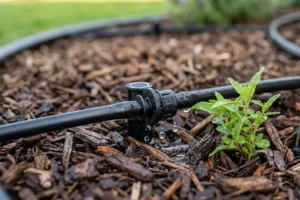
Lawn mowers, shovels, and curious pets love to chew, cut, and crack tubing. Sun and heat can also make old tubing brittle. A leak wastes water and leaves the plants downstream dry.
The fix: Walk the system while it runs and look for puddles or sprays. We cut out the damaged piece and splice in a new one with a proper fitting. Durable tubing and good burial depth help prevent the same trouble later.
Problem 3: Low Water Pressure
Drip systems need gentle, steady pressure. If it is too low, the far end of the line barely drips. If it is too high, fittings pop off and tubing splits.
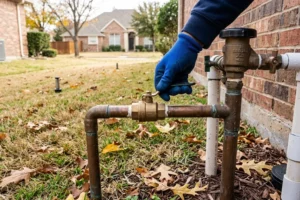
The fix: We test the pressure at the valve and add a pressure regulator when needed. We also check the length of each line, because long runs lose pressure from friction. Splitting a big zone into two smaller ones often solves it.
Problem 4: Poor Spacing and Uneven Coverage
Some plants get a flood while others get a sprinkle. That usually means the emitters were spaced incorrectly for the soil type. Sandy soil needs closer spacing, while heavy clay spreads water more slowly.
The fix: We match the spacing to your soil and plants. We also add microtubing for trees and shrubs that need extra water. This gives you even water distribution and better application uniformity.
Problem 5: Wrong Run Times
Many homeowners set the controller once and forget it. Texas weather swings from drought to heavy rain, so a fixed schedule can overwater or underwater.
The fix: We adjust run times with the seasons and check soil moisture by hand. A smart controller can also help with monitoring and water management, so the system adapts when the weather changes.
How Do You Know Your Drip System Has a Problem?
Your plants and soil will tell you. Look for these signs:
Wilting or yellow plants
The roots are not getting enough water, or the emitter at that plant is blocked.
Soggy spots
A leak or broken pipe is likely sending water where it does not belong.
Dry patches
The zone may have low pressure, a clog, or poor coverage.
Higher water bills
A hidden leak can raise your bill before you ever see a puddle.
When Should You Call a Contractor?
Call when the problem keeps coming back or when you cannot find the cause. A skilled contractor can run a full inspection, test each zone, and fix the root cause instead of just patching it. We install and maintain drip systems for homes and commercial properties, and we love a good puzzle.
Maintenance Saves Money
A quick seasonal check keeps small issues from becoming costly repairs. A well-maintained system does more than prevent leaks. It can also help your plants receive consistent moisture without wasting water.
If you’re wondering whether your current setup is worth keeping, explore how drip irrigation helps save water and support healthier plants before deciding on repairs or upgrades.
At the end of the season, we also winterize the lines so freezing weather does not crack them. Even a small leak or poorly adjusted watering schedule can waste water over time.
Following water-efficient irrigation practices can help homeowners reduce unnecessary water use while keeping their landscape healthy.
Frequently Asked Questions About Drip Irrigation Systems
1. Can a clogged emitter hurt my plants?
Yes. A blocked emitter stops water from reaching the root zone. The plant can wilt even when the rest of the system is running.
2. Should I flush my drip lines?
Yes. Flushing clears out dirt and small particles that build up over time. Doing it at least once a year keeps water flowing evenly.
3. Can I fix a split tube myself?
Yes, in many cases. A simple repair kit and a few minutes can do the job, but hidden or buried breaks may need a professional.
Fix Your Drip Irrigation With Stonebridge Lawn and Garden
Most drip irrigation problems come down to clogs, leaks, pressure, spacing, and schedules. Catch them early, and your plants stay healthy while your water bill stays low.
If your system needs help, call Stonebridge Lawn and Garden today at (972) 625-0066 for a quote. We handle drip irrigation installation, maintenance, and repair in Aubrey and nearby areas. We will inspect your property, explain what we find, and fix it right the first time.