In The Colony, sprinklers don’t get a “quiet season.” North Texas heat, clay soil, and quick weather swings can turn a small issue into a brown patch fast, which is why a regular lawn sprinkler inspection matters. We’re out in The Colony yards every week, and we see the same thing again and again—most problems start small, then grow legs and run off with your water bill.
A sprinkler inspection is like a quick checkup for your system. It helps catch leaks, clogged heads, broken nozzles, and bad spray patterns before they waste water or upset your HOA. Here’s when to schedule one, and why the timing matters.
When should you schedule a sprinkler inspection in The Colony, TX?
The best time is early spring, before you start watering more often. That’s when we catch winter damage, cracked heads, and valve problems before the lawn wakes up and needs steady water.
A close second is mid-summer, when heat and high use can show new issues. We just finished a mid-season check near The Colony Five Star Complex, where one zone was “watering” the sidewalk more than the grass. The owner thought the heat was the problem. It was a mis-aimed head and a worn nozzle.
Early spring: Why it’s the top pick
Spring is when you turn the system back on and raise your watering days. That’s the perfect moment to check pressure, coverage, and leaks.
Broken head. One cracked sprinkler can dump water in one spot and starve the rest of the zone.
Mid-summer: When problems show up fast
Summer is when you notice dry rings, mushy spots, and weak spray. Systems work hard in July and August, and weak parts quit.
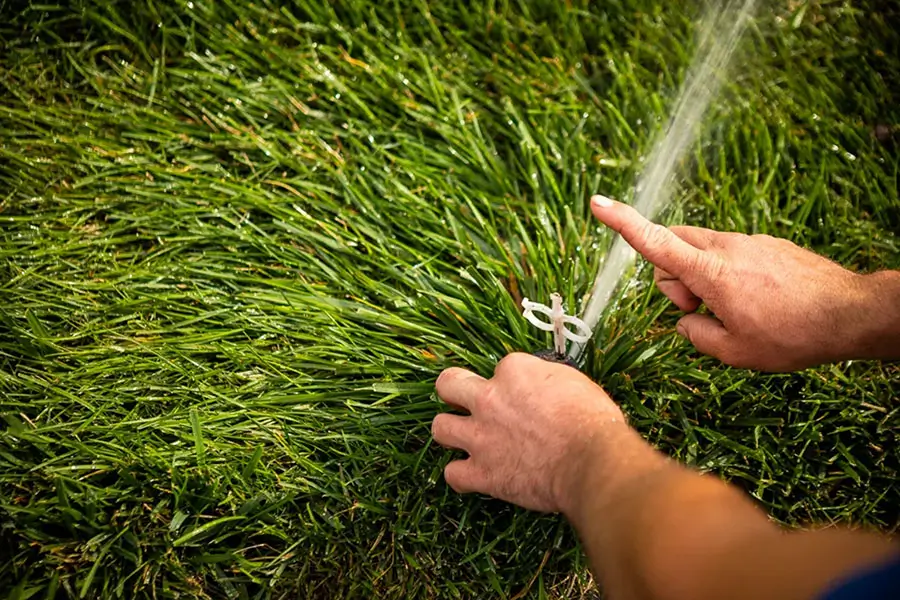
Dry patch. It may not be “bad grass,” it may be a clogged nozzle or a head blocked by tall turf.
Fall: A smart time if you had summer trouble
If your yard struggled all summer, fall is a good time to fix coverage and get ready for cooler weather.
Runoff. Clay soil in The Colony can’t absorb water fast, so we often adjust watering to shorter cycles.
What signs tell me I need an inspection sooner?
Sometimes you shouldn’t wait for spring. If you see these, schedule the check now.
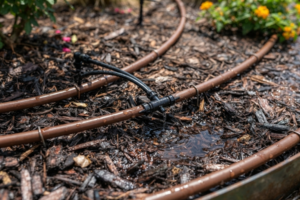
High water bill: a hidden leak can add cost without leaving a big puddle.
Mushy spot: soggy ground near a head or valve box often means a broken line.
Spray hitting windows or fence: Mis-aimed heads waste water and can stain surfaces.
One area is always brown: It may be low pressure, a clogged head, or the wrong nozzle.
We just inspected a system off Main Street where a zone had two heads buried in turf. The sprinklers were “on,” but the grass wasn’t getting much water. A quick head raise and a clean-out fixed it.
How does the colony’s weather and soil change the timing?
The Colony gets hot fast, and the soil is often heavy clay. Clay holds water, but it also causes runoff if you water too long at once. That’s why inspections matter before peak heat.
Clay soil means watering style matters.
If water runs down the driveway, the system may need shorter watering cycles.
Cycle-and-soak. We set shorter runs with breaks so water can sink in instead of sliding away.
Quick weather swings can fool you
A rainy week can hide a leak. Then the sun comes back,k and the bill jumps.
Smart controller check. We make sure the schedule matches the season andthe rain sensor is working.
What do we check during a sprinkler inspection?
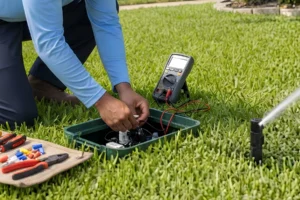
When Stonebridge Lawn and Garden inspects a system, we’re not just looking for one broken head. We check how the whole yard is being watered.
Here’s what a solid inspection covers:
Zone-by-zone run test
We turn on each zone and watch for weak spray, clogs, and gaps.
Head alignment
We aim spray where it should go, not on sidewalks or the street.
Leaks and pressure
We look for bubbling, hissing, and low pressure that can point to a break.
Valve and controller check
We make sure zones turn on and off the right way.
Coverage review
We check if beds, turf, and corners are getting water evenly.
If we find something simple, we often fix it on the spot. If it’s a bigger repair, we’ll explain what’s wrong in plain talk and what it takes to fix it.
How often should you get your sprinklers inspected?
Most homes in The Colony do best with two inspections a year: one in spring and one in summer or early fall. If your system is older or you’ve had repairs, you may need checks more often.
New sod or new beds: These often need small watering changes to keep plants healthy without waste.
After construction: Pool work, fencing, or trenching can nick lines and wiring.
Frequently Asked Questions About Lawn Sprinkler Inspection
Can a sprinkler inspection help lower my water bill?
Yes. Finding leaks, bad nozzles, and overspray can cut wasted water. Small fixes often make a big change on the next bill.
Should I get an inspection even if everything “seems fine”?
Yes. Many leaks and clogs don’t show up until the heat hits hard. A quick check can catch issues before they turn into brown spots.
Can you inspect without changing my whole system?
Yes. An inspection is mostly testing, adjusting, and spotting problems. If repairs are needed, you can choose what to fix and when.
Call Us for a Sprinkler Inspection in The Colony, TX
A sprinkler inspection in The Colony, TX, is best in early spring, with a follow-up in mid-summer or early fall if needed. It helps stop water waste, keeps your yard even, and cuts down on surprise repairs.
If you want a quick sprinkler check, reach out to Stonebridge Lawn and Garden. Call us today at (972) 625-0066, and we’ll help you pick a good time, walk the zones, and get your system spraying where it should—on the grass, not the sidewalk.