Broadleaf weed problems show up fast in Frisco, TX. Warm days, clay soil, and quick rain can make weeds sprout all over a lawn, which is why many homeowners turn to a weed removal service in Frisco when weeds begin spreading faster than the grass can recover. We just worked on a yard in Frisco where weeds spread by seed after a wet week, and the turfgrass looked thin and tired.
Let me share what we see every week, how to spot each weed, and simple ways to control broadleaf weeds before they take over. The goal is a healthy lawn with strong grass that can crowd out many broadleaf weeds.
What are the most common broadleaf weeds in lawns here?
Dandelion and plantain show up first
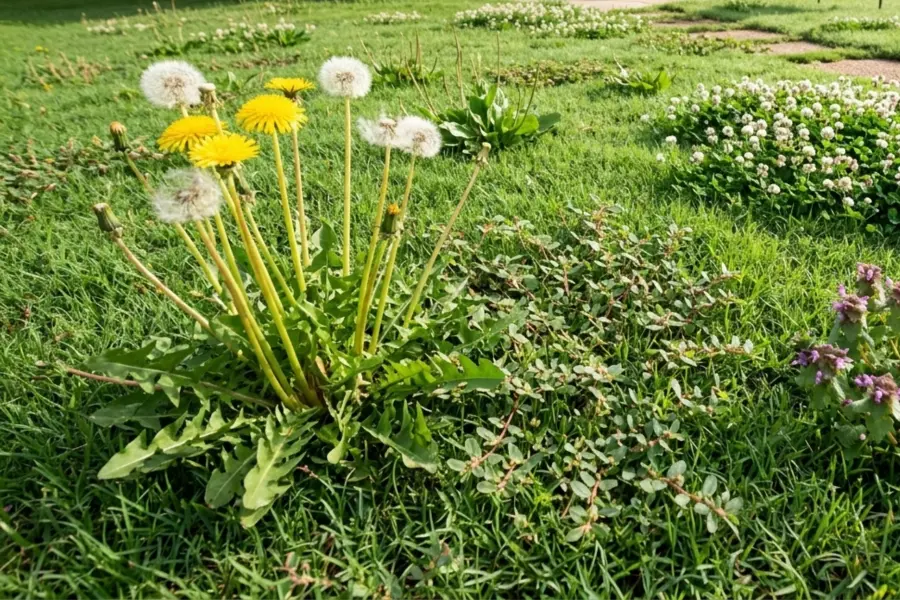
Dandelion with yellow blooms grows low and sends a deep root into the soil. This perennial broadleaf weed can come back each year if the root stays in place.
Broadleaf plantain has wide leaves and thick stems that hug the soil surface. It handles foot traffic and poor soil drainage better than grass.
Clover and chickweed fill in thin turf
White clover forms dense patches and stays low-growing. It was once used as a forage crop for livestock and still fixes nitrogen in the soil.
Common chickweed spreads fast in cool months, and chickweed is a winter annual. It has small leaves and weak stems that creep across the turf.
Creeping weeds that move fast
Ground ivy, also called creeping charlie, is a member of the mint family with leaves with scalloped edges. It sends creeping stems across the lawn and roots at each node.
Thistle grows upright with spiny leaves and can set seed quickly. It is hard to pull once the stem gets tough.
Why do weeds sprout in Frisco lawns?
Soil and water play a big role
Soil is moist after rain, which helps weed seeds germinate. Many annual broadleaf weed types start from seed in the spring and again in late summer and early fall.
Poor soil drainage lets water sit, which weakens turfgrass. Weak grass leaves open space for a lawn weed to move in.
Heat and mowing habits matter
Hot days over 95 degrees stress the grass and slow growth. A stressed lawn can not outcompete a common weed.
Cutting too short when you mow exposes the soil surface. Sunlight hits the soil, and weeds sprout faster.
Past seed and pests
Weeds may be common broadleaf weeds from last season if they set seed. Seeds can sit in soil for years.
Pest activity, like grubs, can thin turf. Thin turf makes room for many broadleaf weeds and even grassy weeds like crabgrass and nutsedge.
How do we handle weed identification and control?
Start with clear weed identification
Each weed species has a different leaf, stem, and growth habit. We look closely at the plant to pick the right one.
Perennial weed types need root removal or the right broadleaf herbicide. Annual weed types need early control before they set seed.
Use smart treatment steps
Spot treat individual weeds with a broadleaf herbicide. This helps kill broadleaf weeds without harming grass.
Pre-emergent plans stop seeds from growing. This helps with summer annual and winter annual broadleaf weed cycles.
Thick turf blocks new weeds. Strong grass seed and proper lawn care close gaps.
Adjust watering and mowing
Cycle and soak watering keeps soil from washing away and helps roots grow deep. Short, repeat cycles reduce runoff.
Raise the mower height so grass shades the soil. Shade slows weed seeds from sprouting.
We just treated a lawn in McKinney with heavy clover and chickweed. After a simple plan with a broadleaf herbicide and better mowing, the turf filled in within weeks.
Which weeds are hardest to control?
Deep roots and fast spread
Perennial broadleaf weeds like dandelion and plantain are difficult to control due to their deep roots. If part of the root stays, it can regrow.
Creeping charlie and ground ivy spread by creeping stems. They move across the lawn and root in many spots.
Tough grassy look-alikes
Yellow nutsedge grows faster than grass and stands taller. It is not a true grass but looks grassy and needs a special plan.
Crabgrass is a summer annual grassy weed that spreads widely. It forms clumps and sets seed fast in heat.
Can you use homemade weed killers?
Be careful with home mixes
Some homemade weed killers can burn leaves, but not the roots. The weed may come back stronger.
Vinegar mixes can harm turfgrass. They do not target only the weed problem.
Safer path for most lawns
Targeted weed killers made for lawns work better on broadleaf weeds in lawns. They are made to protect the grass when used correctly.
Good lawn care beats quick fixes. Strong turf is the best long-term weed control.
What does a healthy lawn look like in Frisco?
Thick grass and balanced soil
Healthy turfgrass forms a tight cover that blocks light at the soil surface. This slows weeds’ sprouting and seed growth.
Balanced soil with good drainage supports deep roots. Deep roots handle heat and reduce weed pressure.
Simple habits that work
Water early in the day so leaves dry fast
This helps avoid disease and keeps growth steady.
Feed the lawn at the right time of year
Strong growth crowds out a lawn weed before it spreads.
We just finished a yard in Plano with patchy grass and many broadleaf weeds found across the front. After a season of proper mowing, feeding, and spot control, the lawn looks full and clean.
Frequently Asked Questions About Weed Removal Service
1. Do broadleaf weeds come back every year?
Yes. Many are perennial and return if roots stay in the soil, while others are annual and return from seed. A plan that targets both root and seed helps reduce repeat growth.
2. Can I kill broadleaf weeds without harming grass?
Yes. A proper broadleaf herbicide targets broadleaf plants and leaves turfgrass safe when used as directed. Spot treating also helps protect the rest of the lawn.
3. Is one treatment enough to fix a weed problem?
No. Most lawns need a mix of steps over time, like mowing, feeding, and weed control. This helps stop weeds from setting seed and keeps the lawn strong.
Take Back Your Lawn from Broadleaf Weeds
Broadleaf weeds in lawns around Frisco can be managed with the right plan. Know the weed, fix the soil, and keep the grass thick. That mix makes a big difference over time.
If weeds in your lawn keep coming back or the problem feels too big, call Stonebridge Lawn and Garden at 972-625-0066.
We can walk the yard with you, point out each weed, and set up a simple plan that fits your property. Reach out to Stonebridge Lawn and Garden, and let’s get your lawn back on track.