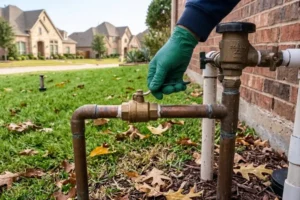
Last week, our crew just finished a blowout on a sprinkler system in Plano. The homeowner watched the last bit of water puff out of the zone and said, “That is the coolest thing I have seen all week.” We chuckled, because we had been standing in the cold for an hour. If you need a trusted sprinkler and irrigation company in Plano, our crew is ready to help.
At Stonebridge Lawn and Garden, we winterize sprinkler systems all across North Texas. A cold front can roll in fast, and a freeze does not send a warning text. Here are the five tips we share with every homeowner.
Why Should Plano Homeowners Winterize a Sprinkler System?
Winter weather in DFW can swing from sunny to icy in one day. Your irrigation system needs protection before that happens.
What Happens When Water Freezes in a Pipe?
When water freezes, it expands. That pushes on the pipe, the fitting, and the valve until something cracks. A tiny crack can turn into hidden leaks and a costly repair in spring.
Which Parts Are Most at Risk?
Here are the parts we see damaged most often:
Backflow preventer: This device sits above ground, so cold air reaches it fast, and it can crack.
Exposed pipes: Pipes near the house or meter have no soil to keep them warm.
Valves: Water inside a valve can freeze and break the seal.
5 Winter Sprinkler Tips for Plano, TX
These five steps are the winterization process we follow on our own jobs.
1. Shut Off the Water Supply
Start by closing the main valve or the isolation valve that feeds your sprinkler system. Some homes have a water shutoff near the meter, and others have one in the garage. Turning it off keeps new water from flowing into the lines.
2. Drain the Water From the Lines
Your pipes have low points where water likes to hide. A compressor blows air through each zone and pushes that water out. We just did this on a home near Legacy West, and every zone drained clean in under an hour. For every step in order, see our freeze-prep checklist for Plano homes.
3. Insulate the Backflow Preventer and Exposed Pipes
Wrap your backflow device with a cover or foam insulation to block freezing temperatures. Disconnect outdoor hoses and cover the faucet as well. Good insulation is cheap, and it helps prevent freezing.
4. Switch the Controller to Rain Mode
Turn your controller to rain mode so it will not run when the pipes are empty. Do not unplug it, because you will want to keep your settings. Think of it as a nap for your system, not a full goodbye.
5. Inspect Before Spring
Once the lines are drained, look for leaks, broken heads, and cracked fittings. Fixing small things now means your lawn will be ready on the first warm day. A quick inspection also tests the functionality of every zone.
Can You Winterize a Sprinkler System as a DIY Project?
Some homeowners do it themselves, and that is fine if you have the right tools. Just be careful, because too much air can harm your system.
What Do You Need to Know Before You Try?
Compressor size: A small compressor may not push enough air to clear every zone.
Water pressure: Air pressure that is too high can crack a pipe or damage a drip line.
Drainage: Water that stays in the lines can leave condensation and freeze later.
If you are not sure, call a pro. We would rather help you than fix a broken pipe in January.
When Should You Winterize in North Texas?
Do not wait for the first freeze. Plan to winterize when nighttime temperatures start dipping near freezing, often in November. Cold snaps in Plano can arrive early, so it is smart to book ahead. The EPA WaterSense program also shares simple irrigation system maintenance tips for homeowners.
Frequently Asked Questions About Sprinkler System
1. Do I need to winterize my sprinkler system in Plano?
Yes. Freezing temperatures can crack pipes, valves, and the backflow preventer. A little prep saves a big repair bill.
2. Should I turn off the water supply to my sprinkler system?
Yes. Closing the main valve keeps water from filling the lines before a freeze. It is the first step in a safe winterization.
3. Can winter rain damage a winterized sprinkler system?
No. Winter rain will not hurt a system that has been drained and insulated. Just keep the controller on rain mode so it does not run.
Ready to Winterize?
A few simple steps can protect your sprinkler system all winter long. Shut off the water, drain the lines, insulate, set the controller, and inspect in spring. That is how you keep your lawn healthy and your wallet happy.
Call us or contact us at Stonebridge Lawn and Garden today, and let us winterize your system before the next cold front arrives. Call (972) 625-0066 to book your visit.