Fertilizing your lawn at the wrong time can do more harm than good, especially in The Colony, TX, where weather and grass growth change throughout the year.
At Stonebridge Lawn and Garden, we understand why homeowners searching for the best lawn fertilization company need more than simply the right fertilizer. Proper timing, soil conditions, weather, and watering all play a role in getting healthy results without putting extra stress on the grass.
We’ve seen lawns struggle when fertilizer is applied during the wrong season. Using the right product at the right time helps protect the grass, improve its strength, and keep your lawn looking healthy.
What Happens When Fertilizer Goes On At The Wrong Time?
A bag of fertilizer can look like an easy fix for a brown or thin lawn. In The Colony, though, timing matters just as much as the product you use.
North Texas lawns deal with hot summers, sudden cold snaps, heavy clay soil, and changing rainfall. Put fertilizer down when the grass is not ready for it, and you may end up feeding the wrong problem.
We see this often when helping homeowners with lawn care. A homeowner sees brown grass, adds fertilizer, waters it, and waits for the lawn to bounce back. Sometimes the grass needs food. Sometimes it needs less water, better drainage, or time to recover from heat.
The wrong fertilizer at the wrong time can make a simple lawn problem worse.
Why Does Fertilizer Timing Matter So Much?
Grass does not grow at the same rate all year. It responds to soil temperature, moisture, sunlight, and the type of grass in the yard.
Warm Season Grass Needs Warm Soil
Many lawns around The Colony have warm-season grass. These grasses grow best when the soil is warm and the grass is actively growing.
Spring timing matters because grass is waking up and starting to use nutrients again.
Summer timing matters because extreme heat can put stress on grass, especially when the soil is dry.
Fall timing matters because the right treatment can support root growth before colder weather arrives.
When fertilizer is applied while grass is barely growing, much of that product may not be used by the lawn.
Can Fertilizing At The Wrong Time Burn Your Grass?
Yes, it can.
Too much fertilizer can damage grass blades and roots. This can happen when the product is too strong, the application is uneven, or the lawn does not get the right amount of water afterward.
We have seen lawns with dark patches where too much fertilizer landed in one spot. Those areas can look worse than the lawn did before the fertilizer was applied.
Brown grass does not always mean fertilizer caused the damage, especially during a North Texas summer. A few simple clues can help you tell whether heat or fertilizer is stressing your lawn before you decide on the next treatment.
This is one reason we check the lawn first instead of simply spreading fertilizer and hoping for the best.
What Happens If You Fertilize During A Hot Summer?
Summer is when things can get tricky in The Colony.
When temperatures push into the 90s and beyond, grass can already be under stress. Adding fertilizer during a period of severe heat and dry soil can put more pressure on the lawn.
Heat Changes How Grass Uses Nutrients
A stressed lawn may not use nutrients the way it does during active growth.
Dry soil can limit how well grass takes in nutrients.
Heavy watering can move nutrients away from the root zone.
Extreme heat can slow grass growth and leave fertilizer sitting unused.
The City of The Colony also advises homeowners to avoid overwatering because nutrients can wash away. The city recommends watering early in the morning and avoiding watering during the hottest part of the day.
That matters when fertilizer and irrigation are being planned together.
What If You Fertilize Too Early In Spring?
Early spring can fool you.
A few warm days may make the lawn look ready to grow. Then North Texas sends another cold front our way.
If the grass is not actively growing, early fertilizer may not give you the result you want. In some cases, early feeding can also encourage growth before the lawn is ready to handle it.
When we check a lawn in The Colony, we look at the grass, soil, moisture, and recent weather before deciding what it needs.
Can Fall Fertilizer Help Your Lawn?
Fall can be a good period for lawn care because temperatures become easier on the grass. Root growth can continue while the top of the lawn slows down.
The Soil Tells Us A Lot
The heavy clay found in many North Texas yards can hold water for a long time. It can also become hard when dry.
Clay soil can hold nutrients and water differently from sandy soil.
Poor drainage can cause fertilizer and water to move away from the areas that need them.
Compacted soil can make it harder for roots to get air, water, and nutrients.
We recently worked on a lawn where the grass looked weak even though the homeowner had been feeding it regularly. The bigger issue was not a lack of fertilizer. The soil was compacted, and water was not moving through the lawn well.
That is a good example of why more fertilizer is not always the answer.
How Can You Tell If You Fertilized At The Wrong Time?
Start by looking at the lawn instead of adding another treatment.
Brown tips can point to fertilizer stress, heat, drought, or other lawn problems.
Dark green stripes can show where fertilizer was applied unevenly.
Thin grass can come from poor soil, shade, pests, watering problems, or weak roots.
Yellow areas can have several causes and should not automatically be blamed on a lack of fertilizer.
If you are not sure what caused the problem, adding more fertilizer can make it harder to figure out what is going on.
What Should You Do Before Fertilizing Your Lawn?
I like to start with a simple lawn check.
Look at the grass type. Check the soil. Watch how water moves across the yard. Look for weeds, insects, bare areas, and signs of heat stress.
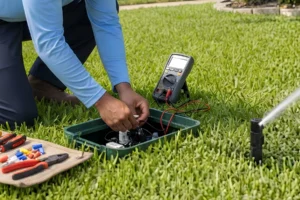
We also check irrigation because a lawn can receive plenty of water in one area while another area stays dry. A broken sprinkler head or poor coverage can change how fertilizer works across the whole yard.
The Colony currently lists Phase 1 of its Drought Contingency Plan, so water use is another reason to plan lawn treatments carefully.
What Is The Best Way To Avoid Fertilizer Problems?
Do not treat fertilizer like a quick fix.
The right product, amount, weather, soil condition, grass type, and watering plan all matter. A lawn that is struggling may need a different solution before fertilizer makes sense.
At Stonebridge Lawn and Garden, we look at the whole lawn before deciding what to do. We work on lawns across The Colony and nearby North Dallas communities, so we know how quickly heat, clay soil, drainage, and watering can change a lawn.
Not sure when your Texas lawn is actually ready for fertilizer? These research-based Texas lawn fertilization tips explain when warm-season grass should be fed, how much fertilizer to apply, and why applying nutrients at the wrong stage of growth can cause problems.
Frequently Asked Questions About Lawn Fertilization
1. Can fertilizing at the wrong time damage my lawn?
Yes. Too much fertilizer or fertilizer applied during stressful conditions can damage grass and roots.
2. Should I fertilize a lawn that is stressed from summer heat?
No. A heat-stressed lawn may need proper watering and recovery before another fertilizer treatment is applied.
3. Can overwatering after fertilizer cause problems?
Yes. Too much water can move nutrients away from the root area and may also create other lawn problems. The City of The Colony advises homeowners not to overwater.
Feed Your Lawn When It Is Ready
Fertilizer can help a healthy lawn grow stronger, but bad timing can waste the product or stress the grass.
In The Colony, lawn care has to work with the weather instead of fighting it. Before spreading fertilizer, check the grass, soil, irrigation, and current conditions.
If your lawn is looking thin, brown, patchy, or just a little unhappy, give Stonebridge Lawn and Garden a call at (972) 625-0066. We are happy to take a look and help you figure out what the lawn actually needs.