Keeping mulch fresh is one of the simplest ways to protect your landscape and make your yard look well-cared-for. Over time, mulch breaks down, fades, and stops doing its job—holding moisture, keeping roots cool, and blocking weeds.
Here in North Texas, where long, hot summers and sudden rainstorms are the norm, timing matters more than most people realize. And since we handle so much landscape design in Prosper, Frisco, and McKinney, mulch questions are something we hear from homeowners all the time.
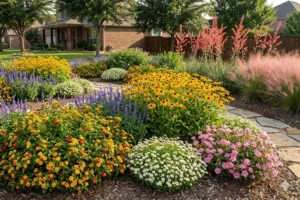
We just refreshed a front bed, and the homeowner couldn’t believe how much richer the landscape looked after a simple mulch renewal. Let’s walk through what I tell my own clients about timing, upkeep, and a few things to watch out for.
Why Does Mulch Degrade So Quickly in Prosper?
What breaks down mulch in our area?
It mostly comes down to heat, sun, and rain. The Texas area sun bleaches mulch faster than most folks expect. Rainstorms wash out lighter mulch, and strong irrigation can cause fading or rot.
High heat: Breaks mulch down faster.
Heavy rain: Washes it away from beds.
Strong sunlight: Drains the color and dries it out.
We just replaced faded hardwood mulch for a homeowner in Prosper who thought their plants were dying. The mulch had simply worn out, leaving the soil hot and dry. A fresh layer fixed it fast.
When Is the Best Time to Renew Mulch?
Is spring or fall better for mulch renewal?
For Prosper landscaping, the two best times to renew mulch are late spring and early fall. Each season helps your yard differently:
Spring renewal keeps roots cool and locks in moisture before the summer heat kicks in.
Fall renewal protects roots from dry, cold air and helps plants rest over winter.
If your mulch is already gray or thin, don’t wait. We often refresh mulch right before HOA inspections or seasonal changes to keep curb appeal strong. For example, our team just renewed mulch during a landscape maintenance job in Frisco, and the fresh color made the whole outdoor space pop.
How Often Should I Replace or Top Off Mulch?
Do I need to replace all the mulch every year?
Not usually. We recommend adding a 1–2 inch top layer once a year. The base layer underneath helps hold nutrients, so you don’t need to remove it unless it’s compacted or moldy.
Too little mulch: Weeds push through, and water evaporates fast.
Too much mulch: Roots can suffocate and block rain from soaking in.
During our professional landscaping services, we check mulch depth and texture during each installation process. It’s a simple habit that helps keep lawns and plants steady all year.
What Type of Mulch Works Best in the North Texas Area?
We mainly use hardwood, cedar, and shredded mulch. Each has its perks depending on your landscape design and plant types.
Hardwood mulch: Long-lasting and great for soil moisture.
Cedar mulch: Smells great and helps repel insects.
Shredded mulch: Stays put better during heavy rains.
Our design team often ties mulch color into the overall landscape and design, matching with stone borders, patios, or outdoor lighting. A dark brown mulch next to lighter stonework brings out that “finished” look homeowners love in their outdoor living space.
Does Mulch Help with Drainage and Irrigation?
Absolutely. Mulch acts like a sponge—it slows water down, helping it soak deep into the soil. That means less runoff, fewer puddles, and happier plants. When we handle drainage work in Prosper or Celina, we always include proper mulch layers in the plan.
It also helps prevent overwatering by keeping the surface from drying too fast. Paired with a smart irrigation setup, mulch can save you money on your water bill and keep your lawn care routine simple.
Why Fresh Mulch Adds More Than Just Color
Renewing mulch once or twice a year does more than just make your yard pretty. It improves the soil, keeps weeds down, and protects your investment in plants, stonework, and hardscape.
Every time we add mulch during a landscaping installation, we see instant results—clean lines, healthy soil, and a strong layer of protection. It’s a small step that gives your beautiful landscape a long life.
Frequently Asked Questions About Landscape Design
1. Should I remove old mulch before adding new?
No. As long as the old mulch isn’t moldy or matted down, you can layer fresh mulch right on top to keep nutrients in the soil.
2. Does colored mulch last longer than natural mulch?
Yes. Dyed mulch keeps its color a bit longer, especially in shaded areas, but it will still fade in strong North Texas sun.
3. Can mulch help control weeds in my lawn beds?
Yes. A solid 2-inch layer blocks sunlight from weed seeds, cutting down on growth and saving you time on lawn care.
Keep It Fresh, Keep It Prosper Strong
Mulch may seem small, but it makes a big difference in keeping your outdoor oasis healthy, tidy, and ready for the Texas seasons. Whether you’re getting ready for summer heat or cleaning up before winter, renewing mulch is one of the smartest lawn maintenance steps you can take.
If you’d like a quick check or fresh install, contact us at (972) 625-0066. We’re happy to stop by your Prosper home or nearby service area to make sure your mulch—and your landscape—stays in top shape.