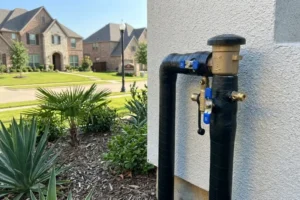
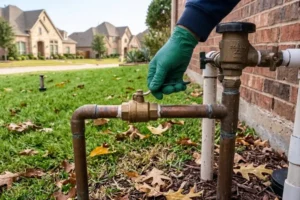
Every winter, our phones light up the morning after a cold front rolls through North Texas. The call is almost always the same: a cracked pipe by the side of a Plano house, and water shooting out like a sad little fountain. We just finished another round of backflow preventer checks this week, and the lesson never changes. Here is how freezing hurts your backflow valve and what you can do about it. When you need local irrigation pros in Plano, our crew is a quick call away.
Why Do Backflow Valves Freeze in Plano?
Freezing temperatures arrive quickly in Plano. Most backflow devices sit above ground, so wind and cold hit them head on.
What Happens When Water Freezes Inside the Valve
Water freezes and expands. Any remaining water in the backflow assembly turns to ice and pushes on the metal from the inside. A hard freeze can crack the valve body or split a fitting. The leak often hides until the weather warms up, and then the surprise shows up as a soggy yard. Every cold night adds to the risk of freeze damage.
Why North Texas Weather Catches People Off Guard
One day it is 70 degrees. The next day, a cold front drops it below 30. We just spoke with a Frisco homeowner who watered on Tuesday and found a cracked valve on Thursday. Texas weather loves a plot twist.
What Does a Backflow Preventer Do for My Home?
A backflow preventer keeps irrigation water from flowing backward into your water supply. This backflow prevention matters because lawn water can pick up dirt and fertilizer. The device stops dirty water from entering your potable water lines, which is great for water safety and keeps your drinking water clean. Many Texas cities want approved backflow devices tested every year, so ask the city about the rules.
How Can I Winterize My Backflow Assembly?
Winterizing is easy, one step at a time. Here is what our crew does on a normal job.
Steps to Help Protect Your Valve
Shut off the water supply. Turn off the main irrigation valve so no new water moves into the backflow assembly.
Set the controller. Switch your sprinkler controller to off or rain mode so the system does not run on a frosty morning.
Drain the water. Open the test cocks a little and leave the handles halfway, so there is space for the water to escape.
Check the sensors. A rain sensor or freeze sensor tells the controller to skip watering when it is wet or near freezing.
How to Insulate the Valve and Pipe
Foam pipe insulation. Wrap the straight, plumb part of the pipe with foam so the cold cannot reach the metal.
Insulated cover. Pick a backflow cover designed for the job, because it blocks cold air, lets damp air out, and gives added protection.
Enclosure. A hard enclosure with insulation adds freeze protection.
Should I Blow Out the Sprinkler Lines Myself?
We say leave this one to the pros. A blowout means we use compressed air to blow leftover water out of each sprinkler line. Too much pressure can crack a fitting or snap a sprinkler head. Let an irrigation technician handle the blowout, and stay inside with a warm drink.
Why Professional Winterization Pays Off
We just wrapped up professional winterization for several homes on one street. We work zone by zone and inspect each valve along the way. Proper winterization keeps your system safe and helps protect the water line from surprises. It pairs well with our five winter sprinkler tips for the rest of your system.
What Should I Do After a Hard Freeze?
Look for Cracks and Leaks
After the thaw, walk the yard. Look for cracks on the valve, wet spots, and standing water near the box. Peek under the cover for ice or water inside.
When to Call Sprinkler Repair
If you spot a leak, shut off the water supply and call sprinkler repair right away. A small crack can grow into costly repairs. You can also read how TCEQ explains cross-connection control and backflow prevention in Texas.
Frequently Asked Questions About Irrigation
1. Can a backflow preventer crack during a Plano winter?
Yes, even one night of freezing temperatures can crack it if water is left inside. A cold front can move in fast, so prep early.
2. Is it okay to wrap my backflow valve in a plastic bag?
No, plastic traps moisture, and that moisture can freeze against the valve. Use a cover made for backflow devices instead.
3. Do I still need to winterize if I have a freeze sensor?
Yes, because a sensor only stops watering. It does not drain the pipes or stop the valve from freezing.
Keep Your Backflow Valve Warm and Dry
Cold weather is part of life in Plano, TX, but a cracked backflow valve does not have to be. Small steps like draining the pipe, adding insulation, and using a good cover help protect your water system, your sprinkler system, and your wallet.
Not sure where to start? Call us at Stonebridge Lawn and Garden. We will inspect your backflow assembly, handle the winterization, and make sure your irrigation system is ready before the next freeze. Call (972) 625-0066 today.