A healthy lawn in The Colony needs more than regular watering. It needs the right amount of water, at the right time, in the right places. If you’re considering sprinkler repair near The Colony, identifying common irrigation problems early can help prevent dry patches, soggy areas, and unnecessary water waste.
After working on lawns across North Texas, we have seen how small sprinkler problems can turn into brown grass, soggy spots, weeds, and wasted water. The hot Texas sun does not give a struggling lawn much time to recover.
We just worked on a lawn where some sprinkler heads were barely spraying while others were sending water onto the sidewalk. The grass looked unhealthy, but the lawn was not the real problem. The sprinkler system was.
Here are five sprinkler problems we check often in The Colony and nearby North Dallas areas.
Why Can Broken Sprinkler Heads Hurt Your Lawn?
Broken sprinkler heads are one of the first things we check.
A cracked head can spray water in the wrong direction. A clogged head may barely spray at all. A sprinkler head that has sunk into the soil can also struggle to cover the grass.
Uneven watering
Some parts of the lawn get too much water while other areas stay dry.
Wasted water
Water may run onto driveways, sidewalks, patios, or streets instead of reaching the grass.
Dry grass
Areas that miss the spray can turn brown during North Texas heat.
We often find these problems after lawn work, construction, or soil movement. A quick sprinkler check can catch them before the grass starts showing stress.
What Should You Look For?
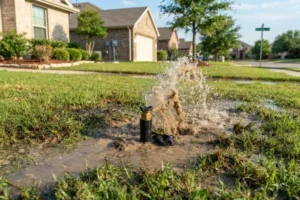
Walk through the lawn while the sprinklers are running. Watch for weak sprays, broken heads, water bubbling from the ground, or water shooting sideways.
Can Poor Sprinkler Coverage Cause Brown Grass?
Poor coverage is a common reason for patchy grass.
Sprinklers need to spread water across the full lawn. If one head covers only half the area it should, the grass outside that spray can dry out.
The lawn may look like it needs more water, so the controller gets changed to run longer. That can make the already wet areas even wetter while dry areas still struggle.
Head placement
Sprinklers should cover the lawn evenly so water reaches the full area.
Spray pattern
The spray should match the shape of the lawn instead of watering sidewalks and other hard surfaces.
Pressure
Low water pressure can make sprinkler heads spray less than they should.
We recently checked a lawn where the center looked green, but the edges were brown. A coverage check showed that several areas were simply missing enough water.
Can Overwatering Damage Grass In The Colony?
Too much water can cause its own set of lawn problems.
North Texas clay soil can hold water for a long time. When sprinklers run too often, water may sit near the roots instead of draining away.
This can create soft soil, weak roots, fungus problems, and muddy areas. Overwatering can also encourage weeds.
How Can You Tell If A Lawn Gets Too Much Water?
Look for standing water after irrigation. Soft ground, yellow grass, and water running down the street can also point to an irrigation problem.
We like to check the soil before changing the watering schedule. The answer is not always more water.
Why Does A Bad Irrigation Schedule Hurt A Lawn?
A sprinkler system can work properly and still hurt a lawn if the controller is set wrong.
The weather in The Colony changes fast. A schedule that works during spring may be too much during a cooler period. Summer heat can also make watering needs rise.
Local watering rules matter too. We check the current city schedule before making irrigation changes.
Run time
Long watering periods can cause runoff, especially on heavy clay soil.
Watering days
Running sprinklers too often can keep the soil wet when the lawn does not need it.
Cycle and soak
Short watering periods with breaks between them can help water soak into the soil instead of running away.
Smart controllers and soil or weather sensors can also help adjust watering when conditions change.
Can Clogged Sprinklers Cause Dry Spots?
Dirt, grass clippings, mineral buildup, and small bits of debris can block sprinkler nozzles.
A clogged nozzle may spray a weak stream or miss part of the lawn. One blocked sprinkler may not seem like a big deal, but several blocked heads can leave large dry areas.
We check the spray pattern during irrigation inspections. Cleaning or replacing the right nozzle can restore coverage without simply adding more watering time.
For more Texas-specific irrigation guidance, this lawn and garden irrigation resource from Texas A&M AgriLife Extension covers watering practices, system scheduling, and efficient irrigation management.
Frequently Asked Questions About Sprinkler Systems
1. Can a broken sprinkler head kill grass?
Yes. A broken head can leave parts of the lawn too dry or too wet, which can weaken grass over time.
2. Can sprinkler runoff damage a lawn?
Yes. Runoff can wash away water before it reaches the roots and can leave some soil areas too wet while other areas stay dry.
3. Should I water my lawn longer if it has brown spots?
No. Brown spots can come from poor sprinkler coverage, clogged heads, pests, disease, or other lawn problems, so more water may make things worse.
What Should You Do If Your Sprinkler System Is Hurting Your Lawn?
Start with a full irrigation check instead of guessing.
Turn the system on and watch every zone. Check the heads, spray patterns, pressure, runoff, and controller settings. Look at the soil too, especially if your lawn has heavy clay.
At Stonebridge Lawn and Garden, we work on irrigation, lawn care, drainage, and full landscape projects throughout The Colony and nearby North Dallas communities. We just do not look at the grass and guess. We look at what is happening below and around it.
If your lawn has brown patches, soggy areas, high water use, or sprinkler problems you cannot find, give Stonebridge Lawn and Garden a call at (972) 625-0066. We are happy to take a walk through the yard and help you figure out what is going on.