Living in Frisco, TX, we know heavy rain can leave a mess fast. Water pools in low spots, drains slowly, and before you know it, yards get washed out and foundations risk damage. Over the years, many homeowners have called a grading and drainage specialist in Frisco to solve these issues, and we’ve helped many neighbors fix them with drainage and grading solutions that truly work.
We just installed a system for a client in The Colony, where water had been sitting against their home after storms. Within a day, the area was draining, and the risk of erosion dropped dramatically. It’s not fancy, but it works, and homeowners notice the difference immediately.
Here’s how we think about it, the questions we hear most, and the solutions that usually make sense for Frisco homes.
Why Is Proper Grading So Important?
What happens if your yard slopes the wrong way?
Poor slope + water pooling = foundation risk. When water collects near your house, it can seep into basements or crawlspaces. Even small amounts of standing water can cause soil to shift over time.
Erosion + bare soil = landscaping problems. Heavy clay soils common in North Dallas don’t drain well. Without a proper slope, rain can wash away topsoil, leaving bare patches and exposing plant roots.
We just leveled and re-sloped a McKinney yard last month. The slope now moves water toward a French drain, and no more puddles form near the home after storms. The client even said their lawn looks healthier already.
How Do Drainage Systems Actually Work?
What’s the simplest way to stop standing water?
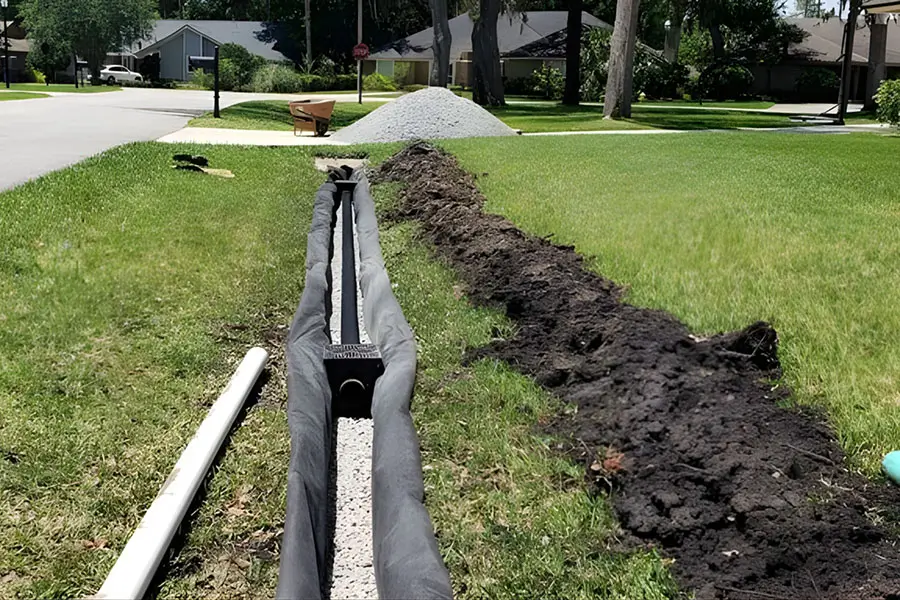
French drains + underground pipes = water away from trouble spots. We install gravel-filled trenches with perforated pipes that capture water and move it to safer areas. It’s low-profile and effective.
Channel drains = driveways and patios stay dry. For hard surfaces, we place shallow channels to catch runoff and redirect it. These are perfect for new patios or pool areas where water tends to run straight into walkways.
Grading + natural flow = reducing extra work. Even before pipes or channels, shaping the land to move water downhill prevents a lot of headaches. Small slopes, berms, or swales make a huge difference.
We just finished a project in Prosper where we combined grading and French drains. Water that once flooded the backyard now flows naturally toward a storm drain, saving the homeowner time and money on constant cleanup.
Can Drainage Solutions Protect My Yard During Heavy Rain?
Absolutely. Proper drainage stops water from washing away soil, damaging lawns, and harming shrubs or trees.
Soil retention + strong root systems = healthier plants. Water sitting on the soil surface weakens roots and can lead to dead patches. Redirecting water keeps plants stable.
Reduced mud + safer outdoor space = more use. Kids, pets, and weekend gatherings all benefit when yards aren’t a mud pit after storms.
Lower risk of structural damage = peace of mind. Water flowing away from your house instead of toward it reduces stress on foundations and walkways.
In Little Elm, we recently installed a grading solution with added drainage for a family that had muddy spots near their deck. As we explained the options, we walked them through what are the key differences between French and trench drains so they could choose the right system for their yard. Now their backyard is safe and ready for summer barbecues. The parents said it’s the first rain-free playtime their kids have had in years.
How Can I Tell If My Yard Needs Drainage Help?
Are puddles lasting more than a day?
If water stays in the same spot after a storm, your slope or drainage is likely not working.
Is soil washing away or leaving bare patches?
Visible erosion means water isn’t moving correctly. Over time, this can expose roots or even compromise patios, fences, or sidewalks.
Do you notice soggy spots near the house?
Water near foundations is a warning. Even small leaks can lead to bigger problems inside walls or under slabs.
We do a lot of inspections around Frisco and Plano. Usually, homeowners are surprised by how a few small adjustments in grading or a simple French drain can fix long-standing problems.
Can Drainage Fix HOA Issues?
Yes. Many HOA rules in North Dallas require yards to drain properly to avoid water pooling on neighbors’ properties.
Compliant grading and proper flow result in fewer complaints. If water is flowing away correctly, HOAs rarely have issues.
Professional installation and durable materials require less maintenance. Correctly installed drains and slopes reduce repairs and improve curb appeal.
We just wrapped a project in Allen where the HOA had flagged water pooling in the front yard. After grading and a channel drain, the yard passed inspection, and the homeowners were thrilled.
Frequently Asked Questions About Drainage and Grading
Can drainage solutions stop all water damage?
Yes. Proper drainage greatly reduces risk, but extreme floods may still cause problems. The goal is to handle normal rain and heavy storms typical for Frisco.
Will grading alone fix erosion?
No. Grading helps water flow, but combining it with drains or soil stabilization gives the best protection.
Is installing a French drain messy?
Yes. Installation involves digging, but we minimize disruption and restore your yard so it looks clean afterward.
Protect Your Home and Yard Before Problems Start
Drainage and grading may not be flashy, but they prevent headaches, erosion, and water damage that can cost thousands down the line.
At Stonebridge Lawn and Garden, we see these issues every week, and a few well-placed drains and proper slopes go a long way. If your yard is prone to pooling or erosion, give us a call. We’re happy to walk your property, show what can be done, and get your yard draining the way it should.
Contact Stonebridge Lawn and Garden today at (972) 625-0066 to schedule a consultation and keep water where it belongs—flowing safely away from your home.